“Nigger” — Their Past and Present Behavioral Analysis
Note on language: This article analyzes a historically weaponized slur as a behavioral classification, not as an identity. The term appears only in quotation or analytic context to interrogate how power, betrayal, and exploitation operate within Black history and the present. This is not casual usage, nor an attack on Black people as a whole. It is a call to account for specific behaviors that cause demonstrable harm.
The Question People Avoid
When the word is raised, many shut down the conversation entirely. That reaction is understandable given its violent history. But refusing to analyze how the term has been used—by Black thinkers themselves—to describe specific behaviors leaves a vacuum that allows those behaviors to continue unexamined.
This piece asks a narrow question:
What does the term describe when it is used by Black intellectuals as a critique of conduct, not color?
Historical Context: Malcolm X’s Distinction
Malcolm X made a clear behavioral distinction in his 1963 speech Message to the Grassroots between the house Negroand the field Negro. His point was not phenotype. It was alignment.
“If you came to the house Negro and said, ‘Let’s run away. Let’s escape. Let’s separate,’ the house Negro would look at you and say, ‘Man, you crazy… Where can I eat better food than this?’ That was that house Negro. That’s what we call him today, because we’ve still got some house niggers running around here.”
Malcolm X was describing a role:
Loyalty to power over people
Comfort over justice
Survival through proximity rather than principle
This was not mimicry for admiration. It was strategy—a guise—designed to extract advantage from whoever wielded influence.
A Behavioral Definition (Not a Racial One)
As used here, the term refers to a pattern of conduct, historically documented and still observable:
Selling out others for personal gain, including the documented existence of cruel Black slave owners
Aligning with abusive power to extract safety, money, access, or status
Undermining, betraying, or triangulating against fellow Black people to elevate oneself
Re‑instituting forms of bondage—legal, social, medical, psychological, or carceral—while claiming victimhood
Inhumanely exploiting a Black person’s suffering for entertainment, leverage, or profit (there’s limit and boundaries which people are not to cross)
This behavior has appeared across eras: from slavery, to Reconstruction, to Jim Crow, to modern entertainment, politics, religion, and institutions.
Power Parasitism
A recurring trait of this pattern is power parasitism.
The behavior:
Ebb and flow toward whoever holds influence
Latch onto power to survive or replicate
Discard principles the moment they become inconvenient
This is not loyalty. It is opportunism.
Malcolm X was clear: these actors are not committed to liberation. They are committed to position.
“Monkeys With Sticks”: Instrumentalization by Deep Racists
Deep racists often use these actors the way a tool is used—temporarily and without respect. The relationship is transactional.
Information is extracted
Harm is outsourced
Plausible deniability is preserved
And when the utility ends, the tool is discarded.
Historically and presently, this has resulted in these actors becoming liabilities even to those they serve—especially when their unrestrained behavior exposes the scheme.
Betrayal Is the Pattern
History records repeated instances of:
Activists being sabotaged from within
Artists and public figures being undermined by insiders
Average citizens being targeted, exploited, or destroyed for access or favor
This is not “poppy syndrome.”
It is intentional targeting for exploitation.
Publicly documented modern behavior—across entertainment, media, religion, and institutions—shows the same pattern repeating under new branding.
Religion, Control, and Moral Laundering
A modern variation cloaks the same conduct in religious language.
Here, suffering is reframed as:
“God’s will”
“Divine purpose”
“Spiritual growth”
…while the same actors actively keep someone confined to harm, instability, or danger.
This is not faith.
It is control dressed as doctrine.
Why This Still Matters
If deep racism exists, this behavioral class exists alongside it. They are not identical, but they share aligned incentives.
Importantly:
Not all Black people who disagree with you fit this description
Not all actors reveal themselves immediately
The behavior eventually shows through patterns: who they protect, who they exploit, and who they silence
Many within Black society are deeply repulsed by this conduct—just as many non‑Black people are repulsed by overt racists.
The Tell
You will often hear a phrase like:
“You’re not alone.”
…spoken by people who have actively worked to:
Keep you in hostile environments
Undermine your growth
Normalize your suffering
Block your exit while moralizing your endurance
Words are cheap.
Behavior tells the truth.
Why I Use the Term in the Present Tense...
How This Correlates to the Abuse Enacted Upon Me
This clarification is necessary because the same behavior Malcolm X identified has been personally enacted against me in contemporary form—and at a scale and intensity that is often dismissed as implausible precisely because it has become normalized in modern society.
I use the term here to identify those who not only deploy the permission structures described above, but who do so after participating in, witnessing, or benefiting from egregious abuse—abuse so severe and sustained that many people reflexively doubt it can occur. That disbelief is not incidental; it is part of how the harm persists.
I have been dehumanized and harmed through coordinated actions that include stalking, exploitation, medical and carceral abuse, character assassination, and the normalization of my suffering as an acceptable cost. When such harm is repeated, routinized, and institutionally echoed, it becomes socially legible as “just how things are.” This normalization is what allows bystanders and collaborators to continue extracting my words, labor, and credibility while denying protection or aid.
In practice, this behavior sounds like:
“Those people need it more than you.”
“You seem to be doing well enough on your own without our support.”
“You got this.” (offered disingenuously, after resources are withheld or harm is enabled)
These statements convert abandonment into virtue. They recast exploitation as triage and cruelty as pragmatism—while my work, language, and experiences are still circulated for others’ benefit.
This is modern enactment of the same role Malcolm X named. The conduct is not disagreement or competition; it is alignment with power against a harmed Black person, where silence functions as permission and action escalates injury.
Why This Matters to Black Society Now
The prevalence of this behavior today creates a real conflict within Black society. Many Black people are opposed to these actions and recognize them as corrosive. Yet the behavior persists because it:
Undermines the credibility of Black culture by confusing betrayal with ambition
Distorts Black history by erasing internal resistance to exploitation
Damages collective identity by normalizing harm as resilience
In this way, the behavior betrays everyone involved.
It betrays Black communities by hollowing out trust and historical clarity. And paradoxically, it also betrays the agenda of deep racists and higher‑level operators who attempt to preserve or protect this role’s existence. Like a snake eating its own tail, the unchecked behavior becomes a liability—exposing schemes, escalating harm, and destabilizing the very structures it was meant to serve.
This is why the term remains behaviorally accurate in the present tense. It names a recurring role that survives by exploitation, thrives on normalization of harm, and ultimately works against liberation—both individual and collective.
Conclusion
This addendum exists to clarify intent and scope, not to provoke.
Malcolm X did not treat the term as frozen in history. In Message to the Grassroots, he explicitly carried it forward:
“In those days he was called a house nigger. That’s what we call him today, because we’ve still got some house niggers running around here.”
That sentence matters because it establishes continuity of behavior, not permanence of identity. The critique is not racial; it is behavioral and ethical.
As used in this work, the term identifies a pattern of conduct observable in the present—not ordinary competition or ambition.
Clarification on competition vs. betrayal:
Legitimate competition (applying for the same role, being selected over another, market rivalry, or preference-based outcomes) is not implicated here.
Mutually understood industry participation—even where exploitation is a known risk—falls outside this definition so long as consent, transparency, and non‑harmful limits are maintained.
The conduct named here requires knowing alignment with abusive power: deception, coercion, triangulation, or material assistance that creates or escalates harm to another Black person.
The defining feature remains alignment with power against a harmed Black person—where silence functions as permission and action escalates injury—rather than the normal frictions of competitive life or career advancement.
This usage follows Malcolm X’s framework precisely: naming those who protect comfort over conscience and proximity over principle. It does not describe Black people as a class. It describes a role that anyone can choose—and that history shows some repeatedly do. It does not describe Black people as a class. It describes a role that anyone can choose—and that history shows some repeatedly do.
I include this addendum to remove plausible deniability. When harm is documented and ongoing, neutrality is not neutral. Silence is not innocent. And behavior that enables abuse deserves to be named plainly.
This analysis is not about reclaiming a slur for shock value. The term is used sparingly and situationally—only in the context of identifying or discussing the behaviors described—never recreationally. Its purpose is preventive and diagnostic, naming conduct when it escalates harm so it can be confronted rather than normalized. It is about naming a recurring betrayal pattern that has survived for centuries because people are afraid to describe it plainly.
Not everyone who harms you is a stranger.
Some are insiders.
And history shows that liberation stalls not only because of external enemies—but because of those willing to trade someone else’s humanity for their own temporary advantage.
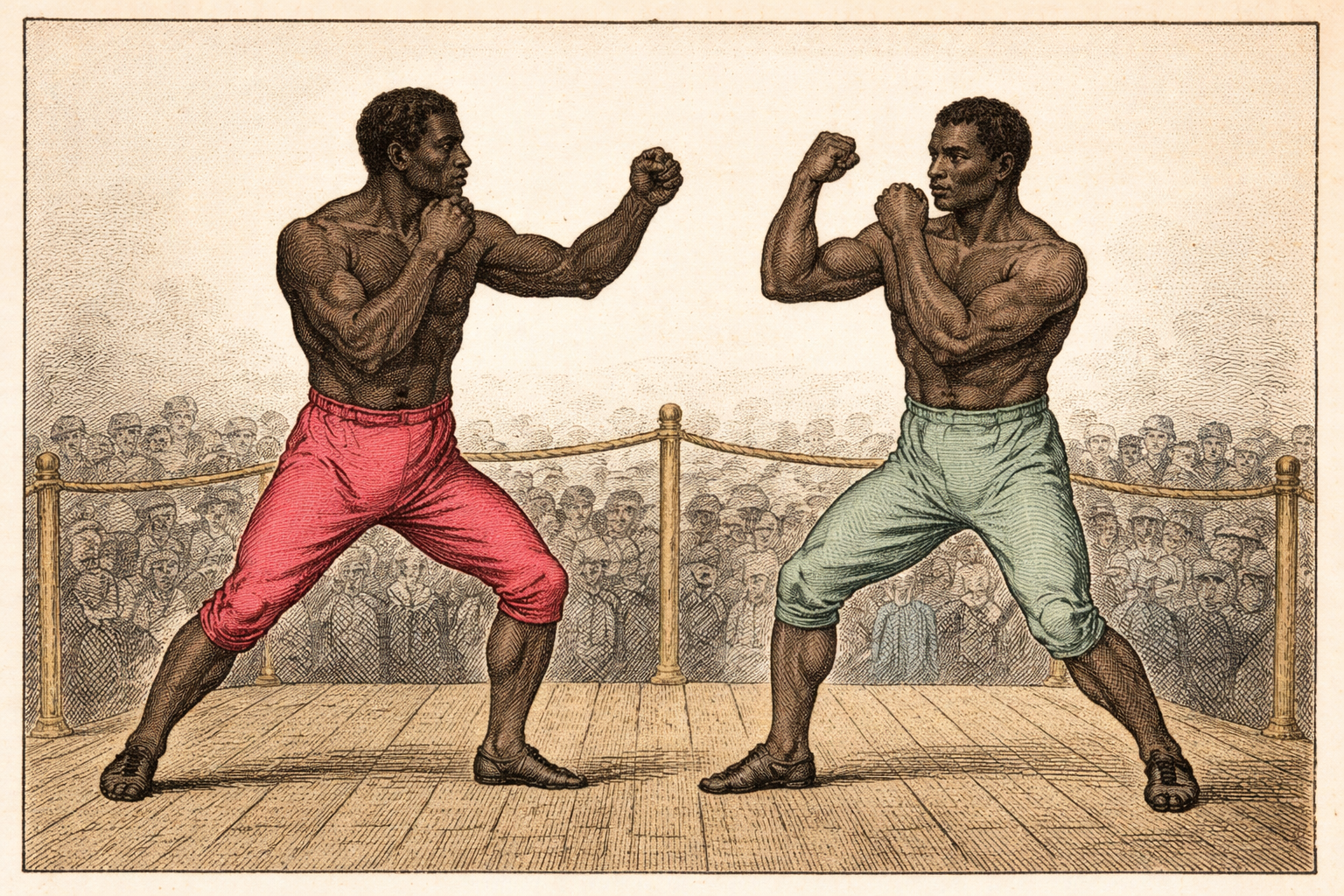
The most efficient systems of oppression do not require constant external force. They rely on internal competition, peer policing, and the belief that proximity to reward equals protection.
Source
Malcolm X, Message to the Grassroots (1963), transcript: Rev.com